Showing posts with label fairies. Show all posts

22 Dec 2012

Alpine Fairy Music

Posted by Beachcombing 

Fairy music is one of the least studied and yet one of the most curious parts of the world of fairy. Why are these curious beings so strongly associated with melodies? drbeachcombing AT yahoo DOT com What is fairy music like? And do all fairy peoples in the world play the violin? Beach can’t even begin to answer most of these questions, but for the last one (distribution) he wants to share some nineteenth-century sources from the German-speaking part of the Alps, that he finds unspeakably beautiful.
Once my wife was standing before her house on a bright moonlit night, and to pass the time she looked out into the ‘world’. At once she heard in the distance a music so lovely that she had never in all her life heard anything like it, just as if the angels were playing. She went away from the house and inched, bit by bit, farther and farther, in order to hear the music better, and the farther she went the more lovely it sounded. At last my wife could no longer stand still, and she walked and walked, and came, just by hearing and listening, all the way to the mountain ravine. There she saw the people of the night travelling through the ravine as if they were in a cloister, and making such magnificent music that it seemed to the foolish woman that she could never get enough of it.
The parallels with fairy music from Britain and Ireland are there, perhaps if anything this is more seductive. Here is an unheard of detail from another late account where a tree plays music for the fairies:
Once a hunter was resting overnight under a dead tree. At midnight he awoke suddenly from his sleep and saw the night people coming toward him. And he thought, ‘one can’t be too careful’ with this kind of people, and so he walked a bit over to one side. The people of the night came closer and closer and took up positions under a small tree, and suddenly the little tree began to play delightful music. One little branch sounded as if it were playing a flute, another as if it were the clarinet, and one little twig made the sound of a small pipe. And the night people began to dance around the tree in pairs so energetically that dust rose up in the wind.
Perhaps music is just a feature of fairy society, which mimics human society in every way? In that case, why is it that fairies are responsible in Ireland, Scotland and apparently on the continent for teaching music.
Having arrived up there, he opened the door by the hay bar in the main room he saw a joyous society, who cordially invited him in to join them in eating. He thought they were tourists [!!!!!!!!!!!!!!!] and because hw as hungry he fell to with an appetite. After a while they asked him if he would like to learn to sing or play the fiddle. He said he’d rather learn to sing because he was too poor to be able to play the violin. The next morning he left this society and walked, singing and yodelling, down the mountain. And everyone came out to listen to his beautiful voice. The chief shepherd asked him, however, where he had learned to sing so beautifully all of a sudden. And the herdsman told him everything so that the shepherd grew jealous and decided that he would exploit the opportunity himself to learn to play the violin.
This, of course, is not going to end well: the wicked shepherd was found ‘bearing the deep impression of a violin on his chest’. Beach knows stories where pipers get their gift from the fairies from the gaelic-speaking world. He also knows stories where greedy unpleasant people get their just deserts when they ask for boons from the fairies. But he knows no other example where the motifs are combined in this way.

15 Oct 2012

How Big Are Fairies?

Posted by Beachcombing 

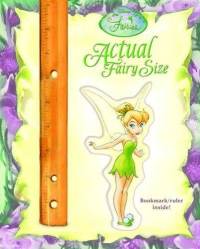
There is a lot of confusion about the size of fairies in tradition and we often read that ‘small’ fairies were the invention of Shakespeare and his hangers on. The proof that small fairies were there all along comes, instead, in Gervase of Tilbury’s Otia Imperialia written and ‘published’ in the early thirteenth century: long before William was even a saliva droplet in the Oxfordian’s splutter. There can be no doubt that Gervase is describing some form of fairy here: solitaries rather than troopers, but fairies none the less.
Sicut inter hominess quedam mirabalia natura producit, ita spiritus, in humanis corporibus aeries que assumunt ex diuina permissione, ludibria sui faciunt. Ecce enim Anglia demons quosdam habet (demons, inquam, nescio dixerim an secretas et ignote generationis effigies), quos Galli neptunos, Angli portunos nominant. Istis insitum est quod simplicitatem fortunatorum colonorum amplectuntur, et cum nocturnas propter domesticas operas agunt uigilias, subito clauses ianuis ad ignem calefiunt, et ranuculas e sinu proiectas, prunes impositas, comedunt. Senili uultu, facie corrugate, statura pusili, dimidium pollicis non habentes, panniculis consertis induuntur; et si quid gestandum in domo fuerit aut honerosi operas agendum, ad operandumse ingerunt, cicius humana facilitate expedient. Id illis inditum est ut  obsequi possint et obese non possint. Verumptamen unicum quasi nocendi modulum habent. Cum enim inter ambiguas noctis tenebras Angli solitarii quandoque equitant, portunus nonnumquam inuisus equitanti se copulat, et cum diucius comitatur euntem, tandem loris arreptis equum in lutum ad manum ducit ; in quo dum infixus uoluatur, portunus exiens cachinnum facit, et sic huiuscemodi ludebrio humanam simplicitatem deridet.
Just as nature produces certain marvels in the world of humans, so spirits perpertrate their jokes in human bodies made of air, which they put on with God’s permission. For instance, England has certain demons (though I admit that I do not know whether I should call them demons, or mysterious ghosts of unknown origin), which the French call neptunes [!], and the English portunes [!!]. It belongs to their nature to take pleasure in the simplicity of happy peasants. When peasants stay up late at night for the sake of their domestic tasks, suddenly, though the doors are closed, they are there warming themselves at the fire and eating little frogs [!!!] which they bring out of their pockets and roast on the coals. They have an aged appearance, and a wrinkled face; they are very small in stature, measuring less than half a thumb, and they wear tiny rags sewn together. If there should be anything to be carried in the house or any heavy task to be done, they apply themselves to the work and accomplish it more quickly than it could be done by human means. It is a law of their nature that they can be useful but cannot do harm. However, they do have one way of being something of a nuisance: when on occasion Englishmen ride alone through the uncertain shadows of night, a portune sometimes attaches himself to the rider without being seen, and when he has accompanied him on his way for some time, there comes a moment when he seizes the reins and leads the horse into some nearby mud. While the horse wallows stuck in the mud, the portune goes off roaring with laughter, and so with a trick of this kind he makes fun of human simplicity.
There is much that is interesting here but note two things. First, some of those familiar fairy features from eighteenth and nineteenth century belief: ragged clothes, mocking laughter, aged appearance, devils or ghosts, airy bodies (?)… Second, they are TINY. The author says, in fact, that they are less than half a thumb in size (statura pusili, dimidium pollicis). There have been some attempts to emend the Latin here so that the portunes become, instead, half a foot or half a yard etc etc. But the textual history of the Otia suggests no irregularities or alternatives. And the only objection to the half thumb size was that being so small they would not be able to do housework. If one wants to get practical there are far more serious objections: not least their very existence! Gervase, in any case, clearly believed that they were tiny: and this begs the question of how small their frogs were…
So seriously how big are fairies? drbeachcombing AT yahoo DOT com In the end fairies can be ant size and shrinking (visit Cornwall), half a thumb tall, they can look like stunted humans, they can be human size, they can be larger than humans, and Beach has the suspicion that some giants are essentially fairies. What we have are protean and powerful beings. Perhaps even some of those magical creatures of Welsh myth – not least Arthur himself – with their shape-changing proclivities were proto-Brittonic fairies? Certainly, there are lots of very weird cousins, pervy uncles and unlooked for step fathers in the fairy family.  May God preserve us from them all…

28 Jun 2012

So You Want to Catch a Fairy…

by Beachcombing

So you want to catch a fairy. Well, first get a butterfly net and collecting jars and for good measure a mousetrap bated with sugar and nutmegs… Ok seriously here are a couple of ‘recipes’ from a seventeenth-century (?) alchemist’s collection.

An excellent way to gett a Fayrie. (For myself I call Margarett Barrance; but this will obteine any one that is not allready bownd.) First, gett a broad square christall or Venice glasse, in length and breadth three inches. Then lay that glasse or christall in the bloud of a white henne, three Wednesdayes, or three Fridayes. Then take it out, and wash it with holy aq. and fumigate it. Then take three hazle sticks, or wands of an yeare groth ; pill them fayre and white; and make them soe longe, as you write the Spiritts name, or Fayries name, which you call, three times on every sticke being made flatt on one side. Then bury them under some hill, whereas you suppose Fayries haunt, the Wednesday before you call her: and the Friday followinge take them uppe, and call her at eight or three or ten of the clocke, which be good planetts and houres for that turne: but when you call, be in cleane life, and turne thy face towards the east. And when you have her, bind her to that stone or glasse.

Beach has so many questions here: Margarett Barrance? Cleane life? And what about Venice Glass?

Then if you don’t want to catch the fairy in question but just to see ‘her’?… Good presumably for a long walk in the wood at twilight.

An unguent to annoynt under the eyelids, and upon the eyelids eveninge and morninge: but especially when you call; or find your sight not perfect. R. [?] A pint of sallet-oyle, and put it into a viall glasse: but first wash it with rosewater, and marygold-water : the flowers ‘to’ be gathered towards the east. Wash it till the oyle come white; then put it into the glasse, ut supra: and then put thereto the budds of holyhocke, the flowers of marygold, the flowers or toppes of wild thime, the budds of young hazle : and the thime must be gathered neare the side of a hill where Fayries use to be: and ‘ take’ the grasse of a fayrie throne, there. All these put into the oyle, into the glasse : and set it to dissolve three dayes in the sunne, and then keep it for thy use; ut supra.

Many ‘fairy stories’ (as opposed to fairy tales) involve human interlopers accidentally sealing their eyes with a fairy cream that allows them to see fairies. Typically, they see fairies doing something they should not – e.g. robbing a market stall – and the fairy turns and blinds the impudent human by sticking a finger in their eye. If you do see fairies after anointing yourself then Beach would advise you not to let on.

Beach went to a Church of England school, has an uber Catholic wife, likes white hens and is frankly terrified of the idea of summoning or ‘seeing’ fairies. If any reader wants to give it a go though please do bring along your digital camera (packed with your Venice glass and pentagram). Beach would, in fact, be grateful for a full report: drbeachcombing AT yahoo DOT com And would genuflect before photographs.


Related posts

  1. Fairy Shysters
  2. Fairy Sighting on Skye, c. 1880
  3. Fairy death in Ilkley
  4. Funny Fairy Stories
  5. Fairy Gifts

16 Apr 2012

Pixie-led in the South-West

Posted by Beachcombing

Beachcombing is back to the fairies. One subject that has intrigued him through this spring is the rare fairy-phenomenon of being ‘pixie-led’, one particularly associated with the south-west of England: hence the name as ‘the pixies’ are the fairies of Cornwall and Devon. To be pixie-led is to be led astray by the good folk while out on the moors or in the woods. Here to start is one eighteenth-century second-hand description:

‘Whitchurch Down (a favourite ride with me and my pony; for it sometimes is a hard matter to get him into any other road) is said to be very famous for the peril there incurred of being pixy-led: for there many an honest yeoman and stout farmer, especially if he should happen to take a cup too much, is very apt to lose his way; and whenever he does so he will declare, and offer to take his Bible oath upon it, ‘That as sure as ever he lives to tell it, whilst his head was running round like a mill-wheel, he heard with his own ears they bits of pisgies [alternative spelling] , a laughing and attacking their hands, all to see he led astray, and never able to find the right road, though he had travelled it scores of times’. And many good old folks relate the same thing, and how the pisgies delight to lead the aged a-wandering about after dark.

Note the sceptical tone here and the idea, one often found in the literature, that pixy-led is actually often whisky-led: though as one early twentieth-century commentator pointed out the experience is not typical of what the drunk actually goes through? Then what about this late nineteenth-century example from Devon? Here you get the chill of the real thing told by a sympathetic voice. It should be noted that turning your jacket or even a pocket inside out was reckoned a way to break the spell.

A few days ago a party of men were ripping bark in a wood about four miles from Torrington. In the evening, when it was time to pick up the tools, one of the men had occasion to separate himself from the party to fetch an iron which he had been using in another part of the wood. He avers, says a correspondent of a contemporary, that in stooping to pick up the tool a strange feeling came over him, and while totally unable to raise himself he heard peels of discordant laughter all around. It flashed across his mind that he was being play led, and though he had many times heard stories of people being in a similar state, his presence of mind forsook him, and he was unable to turn his coat inside out – a sure talisman against the spells of pixies. This was about half-past five in the afternoon. About seven o’clock his wife became uneasy at his non-appearance, and started off to look for him. Happening to meet one of the rippers she asked him whether he had seen her husband. ‘Yes’, replied the man ‘he left work when we did.’ This only added to the poor woman’s troubles, and when ten o’clock came and still no husband, she was greatly alarmed. When she arrived near the place where the man had been working she met her husband dripping wet. ‘Where have you been?’ said she. ‘I’ve been pixy led’ he replied and forthwith told his story. It appears according to his account, that the pixies held him under their spell for nearly five hours, and at the end of that time he was able to crawl away on his hands and knees, and scare knowing where he was creeping tumbled head over heels into a stream. Directly he rose he knew where he was, and made the best of his way homeward. ‘You girt, fule, why didden ‘ee turn your pocket inside out? Was all the comfort he received from his better half: ‘then you would have been able to come away at wance.’ The man firmly believed in pixies, and what strengthens his belief is the fact that a tailor named Short was ‘play led’ in the same wood some years ago, and remained under their magic spell until morning. Cavillers may say that the man was drunk, but is can be proved on the best authority that no intoxicating liquor was drunk that day by any of the party.

25 Feb 2012

What Religion did Fairies Follow?

Posted by Beachcombing

Beach’s endless reading in the literature of fairies has led him to a couple of unusual passages. He honestly doesn’t know that to make of them. In truth, they frighten him.

The first is from a south-western fairy tale where a man is reunited with his ‘dead’ fiancé who is actually trapped in fairy land. While there she explains the lifestyle, beliefs and manners of the fairy folk.

‘For you must remember they are not of our religion,’ said she, in answer to his surprised look, ‘but star-worshippers. They don’t always live together like Christians and turtle-doves; considering their long existence such constancy would be tiresome for them, anyhow the small tribe seem to think so. And the old withered ‘kiskeys’ of men that one can almost see through, like puffs of smoke, are vainer than the young ones. May the Powers deliver them from their weakly frames! And indeed they often long for the time when they will be altogether dissolved in air, and so end their wearisome state of existence without an object or hope.’

This rather ghastly half life is bad enough, but what Beachcombing finds most intriguing is the reference to ‘star-worshipping’. What on earth does this mean in this context? Is it an erudite nineteenth-century reference to astrology? Or is it, if we want to be almost absurdly ambitious, a memory of Neolithic religion in Cornwall in the 1800s? There has long, of course, been the idea that the fairies are the memory of an earlier civilisation.

Beach would plump for astrology and sleep well the night after. But every so often other sources have curious details about fairy religion that are rather more difficult to explain away. This is Robert Kirk on the fairies in his Secret Commonwealth, written in 1691 describing fairy beliefs.

They live much longer than we yet die at last, or least vanish from that state. For ‘tis one of their tenets that nothing perisheth, but (as the sun and year) everything goes in a circle, lesser or greater, and is renewed and refreshed in its revolutions, as ‘tis another that every body in the creation moves (which is a sort of life), and that nothing moves, but has another animal moving on it, and so on, to the utmost minutest corpuscule that’s capable to be a receptacle of life.

We have here a slightly intellectualised version of village Hinduism. But what the hell is it doing in late seventeenth-century Scotland? There are two explanations that jump to Beachcombing’s mind.

First, a wild one: the ancients compared druidic belief to Pythagoras. Is it possible that this transmigration of souls comes from authentic druidic customs that have somehow survived to be represented as fairy beliefs? There was long the idea that fairy belief stemmed from druidic belief.

Second, a contorted version of the same. Is it possible that knowing that transmigration was connected with the druids the seventeenth century had connected these beliefs with the fairies as an act of antiquarianism?

For the record, Beach suspects that both explanations are wrong. And this paragraph remains like a great beached whale flapping its tail and daring us to explain it.

So what is going on here? drbeachcombing AT yahoo DOT com

***

22/1/2012: Phil P writes in to say ‘One other possibility comes to mind. The Rom as presumed to have originally come from India. (Romany is related closely to Sanskrit) Is it possible that they brought a bit of Hindu cosmology to Scotland? I don’t know how far back their presence in the isles goes.’ Thanks Phil!

6 Jan 2012

Epiphany Gift to Readers: Scary Fairies PDF

Posted by Beachcombing

Scary Fairies… While Barrie, Nesbit and others were trying to anodize and castrate fairies c. 1900 out in the wilds of Britain, Man and Ireland there will still those who were terrified of the elfen beggars. This terror finds a little known reflex in the literature of the time. Various authors including Buchan, Machen, Le Fanu and Blackwood decided to pay tribute to fairy fear. This Christmas Beachcombing has collected twenty period scary fairy stories that he hopes to release as a Beachcombing volume later in the year. For now though he has taken five of the twenty that represent a useful spread through the late Victorian/Edwardian world 1872-1919 and put them together in this pdf for his readers as an Epiphany gift, after the success of last year’s War in Dollyland. These works range from neo-traditional tales (‘Laura Silver Bell’) to Machen’s ‘The White People’, perhaps the greatest horror story ever written. Any other tales to add to this pile? Drbeachcombing AT yahoo DOT com There is some latitude for the definition of ‘fairies’ (elves, dwarfs, mermaids – why not?, Pan??) but the narrative must produce fear on some levels. For Beachcombing’s purposes it would be better if the tale is out of copyright but anything goes for the purposes of producing a good long list of fairy terror for the general reader. Beach should also note that the image that heads the pdf-book is authentic in that an early modern Welsh witness sketched it while explaining what the Pwca looked like! Should also note that the pdf is best printed – unless your eyesight is really bad – two to a side: so on a double-sided printer it should be easy to print all five stories with forty sheets of A4.

Let the revels begin…

***

6 Jan 2011: A few emails worth putting up immediately including some from consultations with readers in the last days. First the bad/good news and thanks to Southern Man for this. Seems that Scary Fairies has already been used as a title: several times… One of these though is a free Juno ebook which includes four neo-traditional tales: ‘The Child that Went with the Fairies by Le Fanu’ (will be in Beachcombing’s Scary Fairies), ‘The Adventure of Cherry of Zenor’ (entertaining but hardly frightening), ‘Ethna the Bride’ by Lady Wilde and ‘Tam Lin’ as told by John Joseph Shaun K has the following suggestions: ‘Not on your list is a work by George MacDonald, ‘Phantasies’ (1858). I haven’t read it myself, but I do note it has one of the earlier references to a place called Fairyland, an Other World. The summary I have read paints it more as a fantasy than a weird tale. Not sure it is right for this work, but there you go. As for other ideas, might I suggest a reference to Georges Méliès A Trip To The Moon. Not a fairy story per se, but a marker in time, as the mystery of the paranormal is first transitioned to the stark (if still amazing) technicality of science fiction. The story certainly bears comparison to Other World visitations, though now in distance rather than dimensions. The depiction of the Moon dwellers combined with the novelty and realism of the moving picture would certainly have sent a few viewers up the aisles in fright. i have in my collection a small tome called Witchcraft and Folklore of Dartmoor, by Ruth St. Leger-Gordon (1972, Bell Publishing Co.) It has a chapter or two about fairy (pixie) lore in the area, with accounts that mostly fall into the overwhelmed-and-freaked-out category. NO idea where you might get this book today, but if you have any friends in Dartmoor I would recommend making inquiries. Phil P while not coming up with many titles as such points in the direction of the ‘usual suspects’. Beachcombing will be dredging through their collections and will report back. ‘Here is a list of the authors [that might be useful]. This would be a good source for possible period stories. (From their Wikipedia page) Robert E. Howard, Frank Belknap Long, Clark Ashton Smith, Robert Bloch, and Derleth himself; classic genre fiction by authors such as William Hope Hodgson, Algernon Blackwood, H. Russell Wakefield, Seabury Quinn, and J. Sheridan Le Fanu; I would also check the horror of Ambrose Bierce. Finally, (for now) A very scary modern fairy story that I commend to you: Faerie Tale by Raymond Feist. It is a novel and still in print in paperback. It is good enough that I gave bought copies for several friends.’ Invisible meanwhile points out that there is a Saki Story, Music on the Hill. Thanks to Invisible, Shaun, Phil and Southern Man!


Related posts

  1. The Problem of Pygmy Fairies
  2. Irish Fairies in New Hampshire
  3. Epiphany: War In Dollyland
  4. Eggs, Mermaids and Fairies
  5. Fairies Investigated in Irish Court